Skip to content
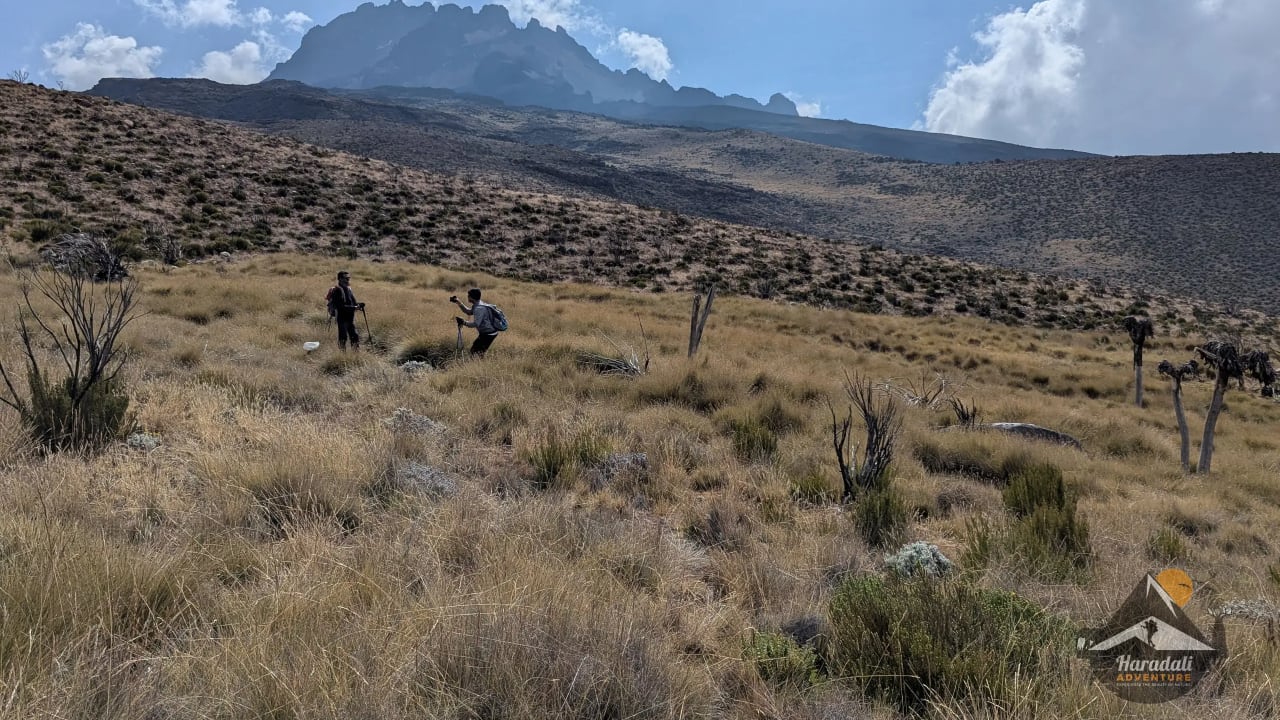
Kibo peak seen across the moorland on Kilimanjaro

7 Day Rongai Route Kilimanjaro Climb

Climb Kilimanjaro from the quiet northern border on the 7-day Rongai Route. Trek past Second Cave, Mawenzi Tarn, and Kibo Hut before reaching Uhuru Peak at 5,895m.

Duration
7 days
Difficulty
Moderate
Location
Mount Kilimanjaro National Park
Max altitude
5,895 m (19,341 ft)
Group size
2 - 12 climbers

Signature Experience Highlights

  • Summit elevation reached: 5,895 m (19,341 ft)
  • Comprehensive journey through Mount Kilimanjaro National Park
  • Optimal 7 days acclimatization schedule
  • Daily health checks & medical oxygen support on all mountain stages
  • 100% fair porter treatment compliant with high ethical standards

Tour Overview

The 7-Day Rongai Route is the only official climbing trail approaching Mount Kilimanjaro from the remote northern border adjacent to Kenya. Starting from Nalemuru near the Rongai Gate, it traverses pristine wilderness and alpine terrain, passing under the dramatic jagged volcanic spires of Mawenzi Peak (5,149m) and camping beside the emerald waters of Mawenzi Tarn.

Recognized by KINAPA and Altezza Travel as a gentle, scenic trail, the 7-day Rongai itinerary features an extra acclimatization day at Mawenzi Tarn Camp (4,315m), elevating the summit success rate above 92%. Because northern Kilimanjaro receives significantly less precipitation than southern slopes, the Rongai Route is the prime choice during shoulder months and short rainy periods.

Route Highlights:

  • True Northern Approach: Untouched wilderness starting close to the Kenyan border with views of Amboseli plains.
  • Mawenzi Tarn Acclimatization: High-altitude camp sheltered beneath Mawenzi's volcanic towers with a natural tarn lake.
  • Drier Microclimate: Optimal for trekking in December-March as well as November and early shoulder seasons.
  • Traverse Experience: Ascends via the wild northern slopes and descends via the lush Marangu southeastern trail.
Geographic Profile

Route & Terrain Dynamics

Start & Base Mount Kilimanjaro National Park
Apex Elevation 5,895 m (19,341 ft)
Trek Pacing "Pole, Pole" (Slow & Steady)

Daily walking times range from 4 to 7 hours across distinct biomes (rainforest, heath, alpine desert, and arctic summit scree). Elevation gains are strategically calculated to give your body adequate time to produce oxygen-carrying red blood cells naturally.

Transparency

What Is Included & Excluded

What's Included

  • All KINAPA national park conservation, camping, and entrance fees
  • Clean, treated, and boiled drinking water at every campsite
  • Dedicated mountain cook preparing fresh, high-nutrition hot meals daily
  • Emergency oxygen cylinders and fingertip pulse oximeters for twice-daily biometric checks
  • Fairly treated mountain porters carrying duffel bags (KPAP aligned, max 15kg climber bag)
  • High-grade all-weather 4-season mountain sleeping tents and comfortable foam sleeping pads
  • Kilimanjaro National Park rescue fees and 18% Tanzania government VAT
  • Large all-weather dining tent with chairs, folding tables, and solar lighting
  • Licensed, certified English-speaking wilderness senior mountain guides
  • Private portable chemical flush toilet with privacy tent

Not Included

  • Alcoholic beverages, sodas, and personal laundry services
  • Doctor-prescribed personal medications (Acetazolamide/Diamox, personal blister kits)
  • International flights to and from Kilimanjaro International Airport (JRO)
  • Mandatory travel and high-altitude emergency medical evacuation insurance (covering up to 6,000m)
  • Personal trekking gear (0°F / -18°C sleeping bag, trekking poles, thermal base layers, waterproof jacket)
  • Pre- and post-trek hotel accommodation in Moshi or Arusha (available upon booking request)
  • Tanzania tourist entry visa ($50 for most nationalities, $100 for US citizens)
  • Tipping / gratuities for mountain guides, cook, and porters (recommended $250 - $350 total per climber)

Day by day

Detailed Itinerary

7Days Itinerary

Day by day • Detailed daily breakdown

  1. 1
    Rongai Gate / Nalemuru (1,950 m) to Simba Camp (2,625 m)
    2625 m7.0 km3.5 hours

    Depart Moshi after breakfast for a scenic 3-4 hour drive through rural villages and pine plantations to Nalemuru near Rongai Gate (1,950m) on the northern slopes. After park registration and porter weighing, begin hiking on a gentle winding path through pine plantations and vibrant montane forest. Look out for blue monkeys and black-and-white colobus monkeys in the canopy. The forest gradually gives way to high moorland grasses as you arrive at Simba Camp (2,625m) with panoramic views across Kenya’s vast savannah plains. • Trekking Time: 3.5 hours • Distance: 7.0 km • Altitude: 2625 m

  2. 2
    Simba Camp (2,625 m) to Second Cave (3,450 m)
    3450 m6.0 km3.5 hours

    After a warm breakfast, resume trekking with a steady morning ascent through the heather and moorland zone. Notice the striking exotic flora including giant erica heaths. En route, enjoy majestic views of Kibo's eastern ice cap and the jagged peaks of Mawenzi. Reach Second Cave (3,450m) by midday for a hot lunch. The afternoon is spent resting, hydrating, and taking a short acclimatization walk around the rocky volcanic terrain before dinner. • Trekking Time: 3.5 hours • Distance: 6.0 km • Altitude: 3450 m

  3. 3
    Second Cave (3,450 m) to Kikelewa Cave (3,600 m)
    3600 m6.0 km3.5 hours

    Depart Second Cave heading southeast across open moorland into the remote Kikelewa Valley. As you ascend, the vegetation becomes sparser and the jagged volcanic spires of Mawenzi dominate the horizon. Arrive at Kikelewa Cave Camp (3,600m) in time for lunch. Spend the afternoon relaxing and soaking in the tranquil surroundings far from crowded trails. In the evening, enjoy clear starry skies and a hearty meal in the mess tent. • Trekking Time: 3.5 hours • Distance: 6.0 km • Altitude: 3600 m

  4. 4
    Kikelewa Cave (3,600 m) to Mawenzi Tarn Camp (4,315 m)
    4315 m4.0 km3.5 hours

    A short but steeper climb up grassy volcanic slopes leads directly into the high alpine semi-desert zone. The reward is reaching the spectacular Mawenzi Tarn Camp (4,315m), uniquely situated in a cirque right below the towering 5,149m pinnacles of Mawenzi. A natural alpine tarn (lake) reflects the rocky spires above. Spend the afternoon on acclimatization hikes up Mawenzi ridge, allowing your respiratory system to adapt to the thin air. Dinner and overnight under dramatic volcanic cliffs. • Trekking Time: 3.5 hours • Distance: 4.0 km • Altitude: 4315 m

  5. 5
    Mawenzi Tarn Camp (4,315 m) to Kibo Hut (4,700 m)
    4700 m8.0 km5.0 hours

    Head west crossing the vast, barren alpine desert expanse known as 'The Saddle' between Mawenzi and Kibo. The terrain resembles a surreal lunar landscape with sweeping views of the barren volcanic plain and Kibo's eastern crater wall. Arrive early in the afternoon at Kibo Hut (4,700m). Rest, hydrate, and prepare thermal summit clothing and headlamps. Enjoy an early dinner at 17:00, undergo your pulse oximeter check, and sleep before the midnight summit departure. • Trekking Time: 5.0 hours • Distance: 8.0 km • Altitude: 4700 m

  6. 6
    Kibo Hut (4,700 m) to Uhuru Peak (5,895 m) to Horombo Hut (3,720 m)
    3720 m17.0 km13.0 hours

    Summit night begins with hot tea at midnight. Ascend steep volcanic scree switchbacks past Hans Meyer Cave (5,150m) to reach Gilman's Point (5,681m) on the crater rim just as the sun emerges over Mawenzi. Trek along the glaciated rim for another 1.5 hours to reach Uhuru Peak (5,895m / 19,341 ft)—the highest point in Africa! After celebration and summit photos, descend back to Kibo Hut for lunch and a short rest, then continue down through the alpine desert to Horombo Hut (3,720m) for a well-earned rest in higher oxygen levels. • Trekking Time: 13.0 hours • Distance: 17.0 km • Altitude: 3720 m

  7. 7
    Horombo Hut (3,720 m) to Marangu Gate (1,860 m) to Moshi
    1860 m20.0 km6.0 hours

    Enjoy your final mountain breakfast surrounded by views of the cloud ocean below. Descend past Mandara Hut (2,700m) through the moorland zone and into the lush tropical montane forest to Marangu Gate (1,860m). Sign the park exit logbook and receive your official KINAPA summit certificates. Celebrate with your guides and porters during the farewell tipping ceremony before boarding your private transfer back to Moshi for hot showers and celebration. • Trekking Time: 6.0 hours • Distance: 20.0 km • Altitude: 1860 m

Accommodation Standards & Comfort

On trekking itineraries, we provide four-season expedition mountain tents with thick high-density foam sleeping pads, private chemical toilet tents, and a spacious all-weather mess tent with dining tables and back-supported chairs. On safari days, lodging matches your chosen comfort tier (hand-picked eco-lodges or luxury tented safari camps with en-suite bathrooms and solar hot water).

4-Season Tents Wind & waterproof
Private Toilet Tent Sanitary & private
Dining Mess Tent Hot prepared meals
Lodge Options Comfort to Luxury

Preparation

Difficulty & Fitness Requirements

Grade: Moderate No technical climbing gear required

This trip requires good cardiovascular fitness and leg endurance. Prior mountaineering experience is not mandatory, but you should be capable of walking 5 to 7 hours per day with a 6–8 kg daypack. We recommend 8 to 12 weeks of training before departure: stair climbing, trail hiking with a loaded backpack, and aerobic workouts (jogging, swimming, cycling).

Aerobic Training 3x weekly cardio sessions
Hiking Practice Hill walking with daypack
Mental Focus Patience and steady pacing

Clear value

Pricing & Departure Schedule

Indicative Base Fare

From $2,180 per person

Regular: $2,350

Private Departure Year-Round Includes all park conservation fees and crew wages

Private Treks: Start any day of the year you choose. No penalty for solo or duo parties.

Open Group Treks: Scheduled weekly departures during the dry seasons (June–October & December–March).

Solo Climbers: Join an existing open departure or book a dedicated private expedition.

Our Standard

Medical Safety & Ethical Crew Care

Safety Protocols

  • Twice-daily pulse oximeter and Lake Louise AMS evaluations.
  • Emergency medical oxygen cylinders on every climb.
  • Wilderness First Responder (WFR) certified lead mountain guides.
  • Direct satellite and radio communication with base dispatch in Moshi.

Fair Porter Welfare

  • Fair, timely wages exceeding national park statutory minimums.
  • Enforced 20 kg strict porter load limit verified at gate scales.
  • Warm all-weather mountain tents and three hot meals provided daily.
  • Medical care and emergency mountain transport for all crew members.

Gear Checklist

Packing & Equipment Checklist

Essential Gear Essentials

Clothing Layers:

  • Moisture-wicking thermal base layers
  • Insulating fleece or down mid-layer jacket
  • Waterproof Gore-Tex hard-shell jacket & pants
  • Heavy summit mittens and windproof gloves

Footwear & Gear:

  • Broken-in waterproof hiking boots
  • Four-season sleeping bag (rated to -10°C)
  • Headlamp with spare lithium batteries
  • Telescopic trekking poles with rubber tips
Gear rental is available in Moshi before departure. Read gear & preparation advice →

Travelled with us? Share your feedback

Answers

Frequently Asked Questions

Why choose the 7-day Rongai Route over the 6-day itinerary?

The 7-day itinerary includes a crucial acclimatization stop at Mawenzi Tarn Camp (4,315m). Spending two nights above 3,600m before the summit bid allows the body to generate more red blood cells, boosting summit success rates from ~75% on the 6-day route to over 92% on the 7-day.

Was this answer helpful?
What makes the Rongai Route unique compared to southern routes like Machame?

Rongai is the only route that begins on the north side near Kenya. It has significantly lower foot traffic, feels like a true remote wilderness expedition, and traverses across the mountain by descending on the southeastern Marangu route.

Was this answer helpful?
Is the Rongai Route suitable during wetter months?

Yes! The northern slopes of Kilimanjaro lie in the rain shadow of Kibo and Mawenzi, receiving significantly less precipitation than the southwestern and southern approaches like Machame or Umbwe, making it the top choice for shoulder seasons.

Was this answer helpful?

Common questions

Frequently asked questions

What is included in your safari and tour packages?

Most of our packages include accommodation, meals, park fees, private 4x4 safari transport, professional guides, airport or hotel transfers, and activities mentioned in the itinerary. Specific inclusions may vary depending on the tour.

Was this answer helpful?
What is the best time to visit Tanzania?

Tanzania can be visited year-round, but the best time for safaris is usually during the dry season from June to October. Zanzibar is also beautiful during this period, while Kilimanjaro climbs are ideal from January to March and June to October.

Was this answer helpful?
Can I customize my safari itinerary?

Yes! We specialize in personalized experiences and can tailor your safari, Zanzibar holiday, or Kilimanjaro trek based on your travel style, budget, and preferences.

Was this answer helpful?
What type of accommodations do you offer?

We offer a variety of accommodations including budget camps, mid-range lodges, luxury safari lodges, beachfront resorts, and mountain camps during Kilimanjaro treks.

Was this answer helpful?
Are your safaris private or shared?

We offer both private and group safari options. Private safaris provide a more personalized experience, while group safaris are a great option for travelers looking for a more affordable adventure.

Was this answer helpful?
Is climbing Mount Kilimanjaro difficult?

Climbing Kilimanjaro is physically challenging but achievable for most people with proper preparation and determination. Choosing the right route and itinerary greatly improves acclimatization and summit success.

Was this answer helpful?

All questions

Plan with confidence

What travellers ask before they book

Keep reading

Related guides and articles

All guides →