Skip to content
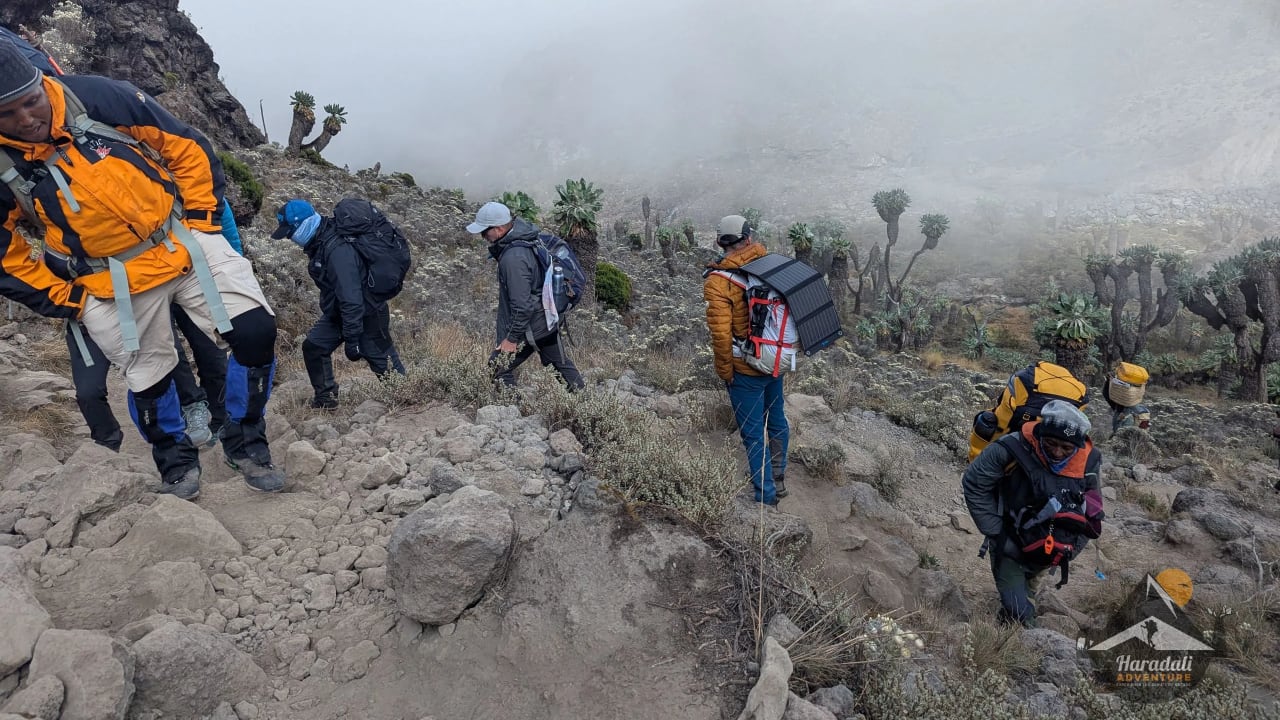
Porters and hikers on the Barranco Wall, Kilimanjaro

Travel Tips & Packing

Tipping Guides and Porters on Kilimanjaro: How It Works

Tips are an important part of the income of mountain crews. Here is how the system usually works and how to handle it fairly.

2 min read · by Haradali Adventure

A Kilimanjaro climb is supported by a whole team: the lead guide, assistant guides, a cook, camp staff and porters who carry gear, food and water. Wages in the tourism industry are modest, and tips are a customary part of a crew's income. Understanding how they work in advance avoids awkwardness on the last day.

Who is on the crew?

  • Lead guide: responsible for safety, route and pace.
  • Assistant guides: support the group, especially on summit night.
  • Cook (and helper): prepares meals at every camp.
  • Porters: carry the equipment, tents, food and your duffel bag.

Each role receives a different share, and the crew is usually larger than people expect.

General principles

  • Ask your operator for guidance before you travel. They can tell you the usual range for your group size and itinerary, and what portion is for each role.
  • Tip as a group. If you climb with others, agree on a total and pool it. Pooling is simpler and fairer.
  • Tips are given at the end, usually at a short ceremony on the last day, after the descent. Your guide will organise it.
  • Give cash. Bring small notes in a currency your operator recommends (often US dollars or Tanzanian shillings).
  • Hand tips to the right people. It is usual to hand the total to the lead guide in front of the crew, or to give each role's share directly, as your operator advises.

Fairness for porters

Porters are the people who do the hardest physical work. Responsible operators pay fair wages, limit the weight porters carry and follow guidelines such as those set by the Kilimanjaro Porters Assistance Project (KPAP). When you choose an operator, ask how porters are paid, how much weight they carry and whether they are given proper clothing and food.

Other ways to say thank you

Good clothing in decent condition, such as gloves, jackets and boots you no longer need, is gratefully received by crew. Give it directly, or ask your guide how to share it fairly.

A note on amounts

Amounts change with the number of climbers, the length of the climb and the exchange rate, so we do not publish a fixed figure here. Ask us when you enquire and we will give you the current guidance for your group.

Updated 15 October 2026

Related tours

Hikers crossing a boulder field high on Mount Kilimanjaro

Mount Kilimanjaro National Park

9 Day Northern Circuit Kilimanjaro Climb

9 days•Moderate
  • 9 days
  • Moderate

Climb Mount Kilimanjaro on the 9 Day Northern Circuit Kilimanjaro Climb with certified KINAPA wilderness guides and high summit success.

From $3,150 per person

Giant groundsel plants beside the trail on Mount Kilimanjaro

Mount Kilimanjaro National Park

8 Day Lemosho Route Kilimanjaro Climb

8 days•Moderate
  • 8 days
  • Moderate

Climb Mount Kilimanjaro on the 8 Day Lemosho Route Kilimanjaro Climb with certified KINAPA wilderness guides and high summit success.

From $2,485 per person

Hikers and porters scrambling up the Barranco Wall on Kilimanjaro

Mount Kilimanjaro National Park

7 Day Machame Route Kilimanjaro Climb

7 days•Challenging
  • 7 days
  • Challenging

Climb Mount Kilimanjaro on the 7 Day Machame Route Kilimanjaro Climb with certified KINAPA wilderness guides and high summit success.

From $2,250 per person

The Mandara Hut sign at 2,720 metres on the Marangu route, Kilimanjaro

Mount Kilimanjaro

5 Day Marangu Route Kilimanjaro Climb

5 days•Challenging
  • 5 days
  • Challenging

Marangu route, commonly known as the coca cola route is more popular because it can be done in fewer days and has permanent sleep huts at the campsites.

From $1,850 per person

Common questions

Frequently asked questions

What is included in your safari and tour packages?

Most of our packages include accommodation, meals, park fees, private 4x4 safari transport, professional guides, airport or hotel transfers, and activities mentioned in the itinerary. Specific inclusions may vary depending on the tour.

Was this answer helpful?
What is the best time to visit Tanzania?

Tanzania can be visited year-round, but the best time for safaris is usually during the dry season from June to October. Zanzibar is also beautiful during this period, while Kilimanjaro climbs are ideal from January to March and June to October.

Was this answer helpful?
Can I customize my safari itinerary?

Yes! We specialize in personalized experiences and can tailor your safari, Zanzibar holiday, or Kilimanjaro trek based on your travel style, budget, and preferences.

Was this answer helpful?
What type of accommodations do you offer?

We offer a variety of accommodations including budget camps, mid-range lodges, luxury safari lodges, beachfront resorts, and mountain camps during Kilimanjaro treks.

Was this answer helpful?
Are your safaris private or shared?

We offer both private and group safari options. Private safaris provide a more personalized experience, while group safaris are a great option for travelers looking for a more affordable adventure.

Was this answer helpful?
Is climbing Mount Kilimanjaro difficult?

Climbing Kilimanjaro is physically challenging but achievable for most people with proper preparation and determination. Choosing the right route and itinerary greatly improves acclimatization and summit success.

Was this answer helpful?

All questions

Plan with confidence

What travellers ask before they book

Keep reading

Related guides and articles

All guides →